Journey Through the Swiss Alps by Train
Back in 2004, we explored Switzerland by train on a trip designed around the Swiss Alps—from medieval lakeside towns to snow-covered mountain peaks. It's been a while since we visited, and looking through the old pictures helped revive memories I'd forgotten. Here's what made the trip memorable.
Note: All our photos from this trip were taken on film cameras.
Zurich and Rapperswil: Lake Views and Roses
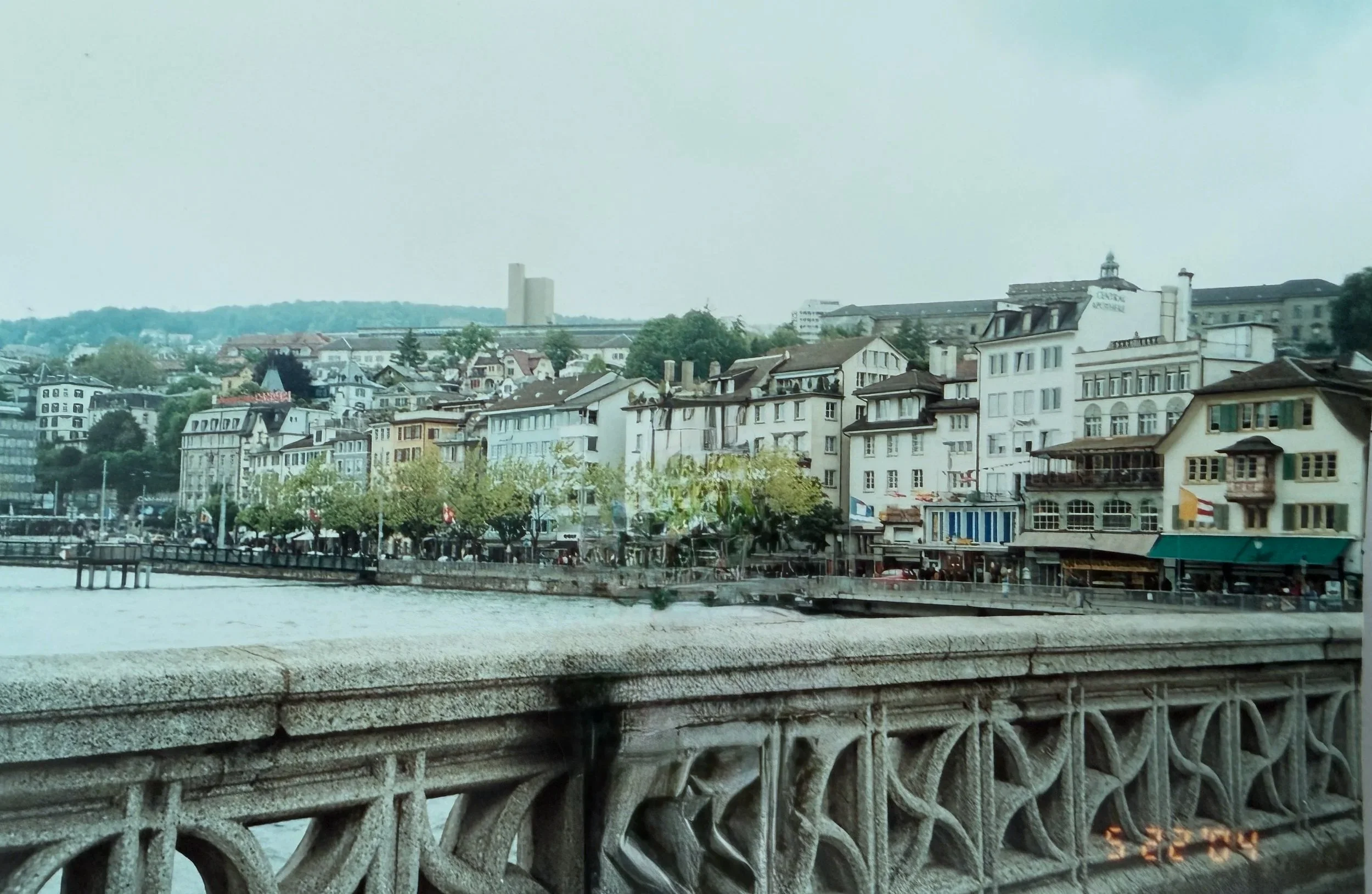
Zurich City
We flew into Zurich and walked around Lake Zurich on our first day—a relaxed start after the flight. The next day, we took a boat across the lake to Rapperswil, a medieval town renowned for its over 16,000 roses in its gardens.
The highlight was the Holzbrücke wooden footbridge—at 841 meters, it's Switzerland's longest wooden bridge. Built along a medieval pilgrimage route to Santiago de Compostela, it passes the tiny Heilig Hüsli chapel (built 1551) on an islet in the lake. Walking across with Alps on one side and Lake Zurich on the other was magical.
In the old district, we wandered cobblestone streets and visited Rapperswil Castle (12th century), the Parish Church of St. John, and monastery gardens.
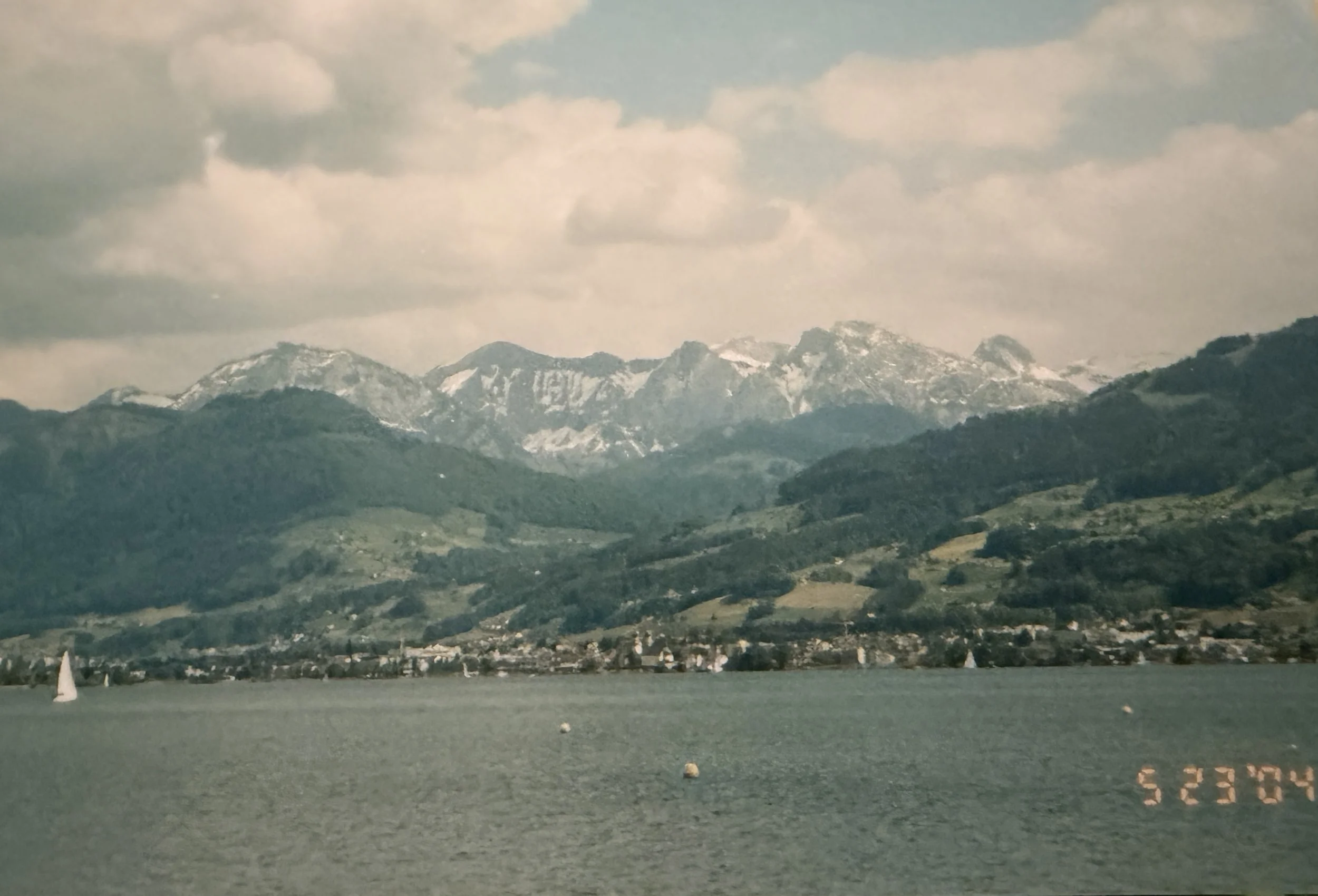
Lake Zurich
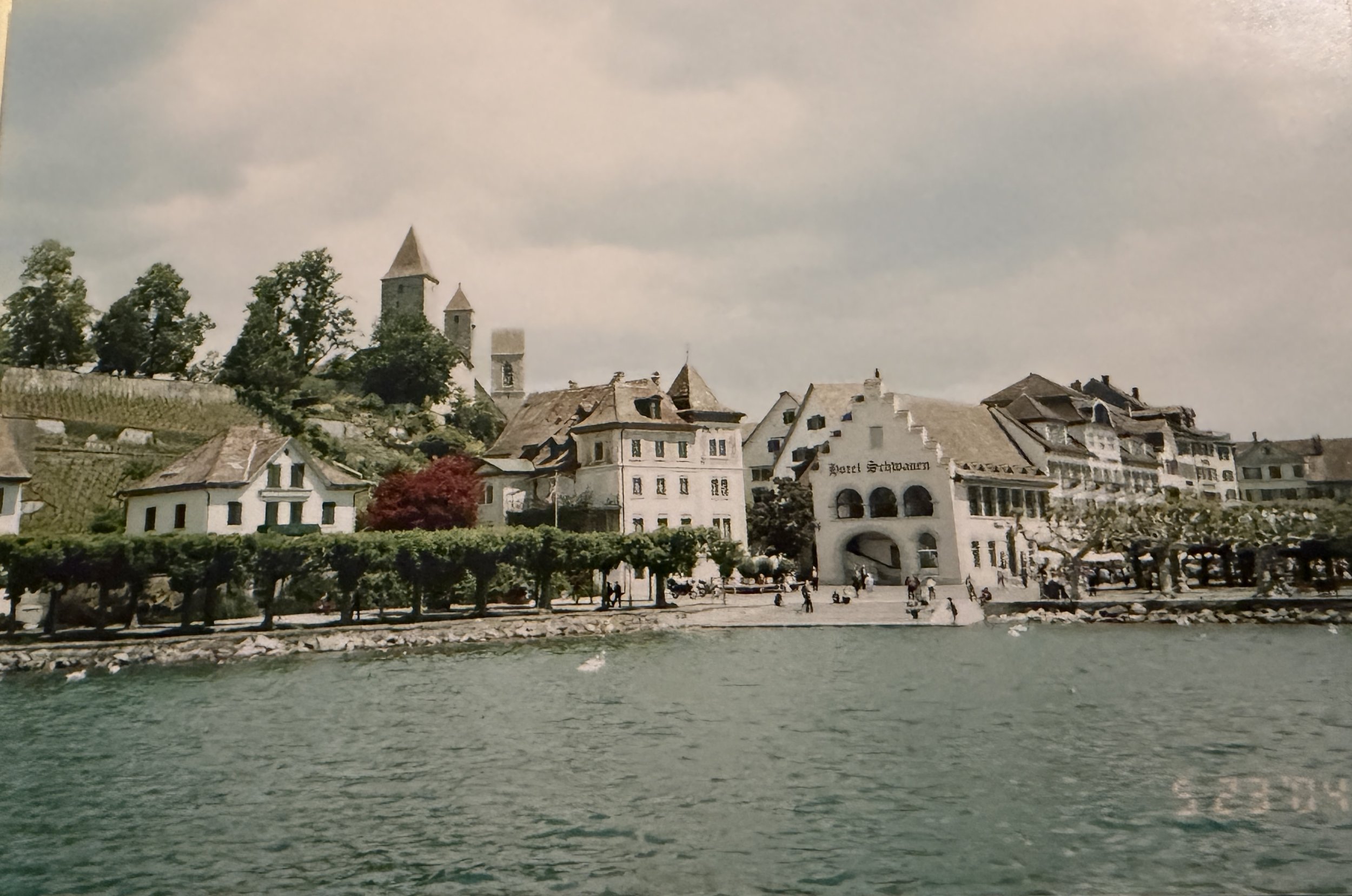
Rapperswil from the lake
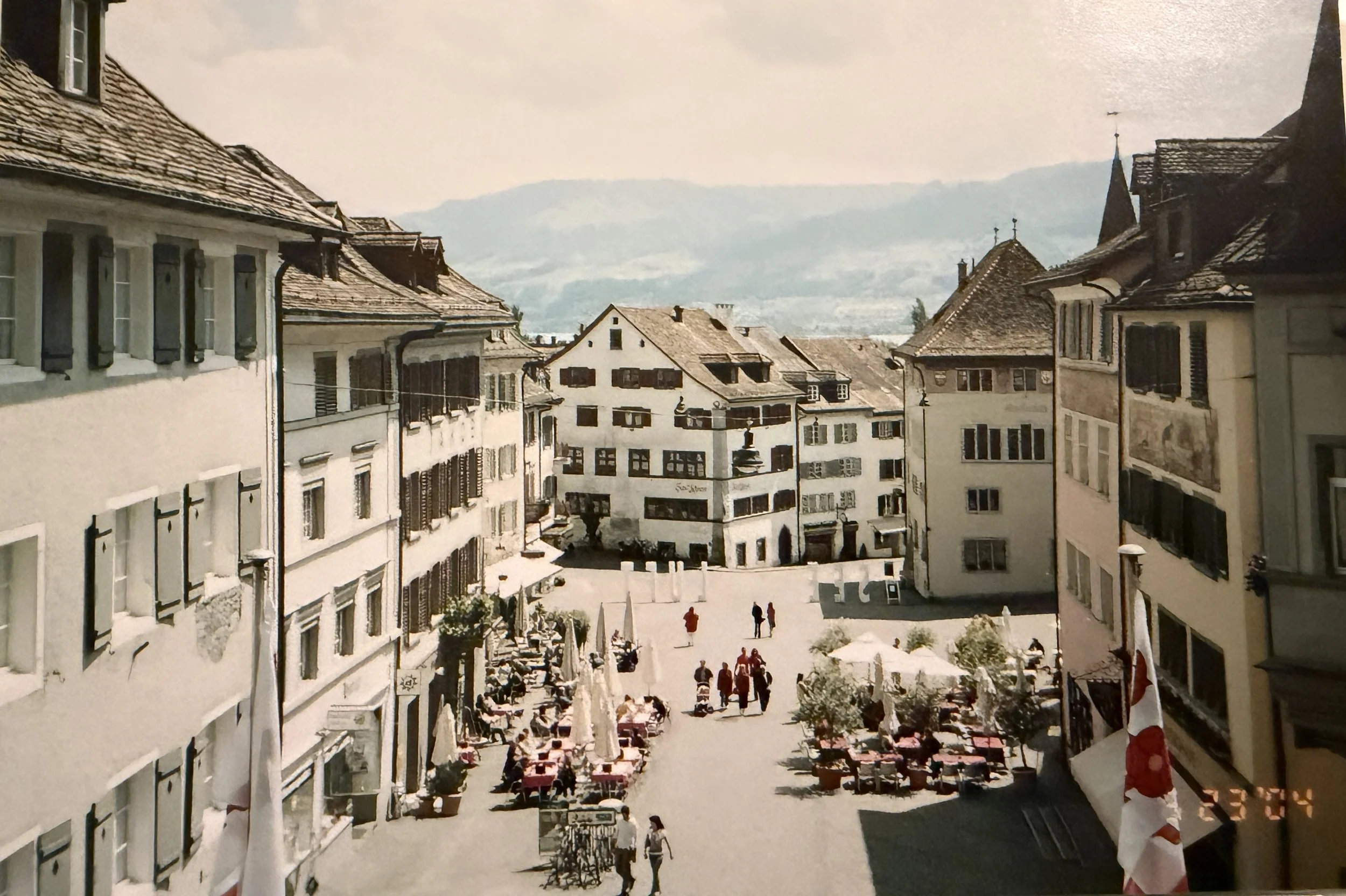
Rapperswil
Interlaken: Our Home Base
We took the train to Interlaken and stayed at Hotel Splendid—perfectly located between Lake Thun and Lake Brienz, surrounded by mountains.
Jungfraujoch: Top of Europe
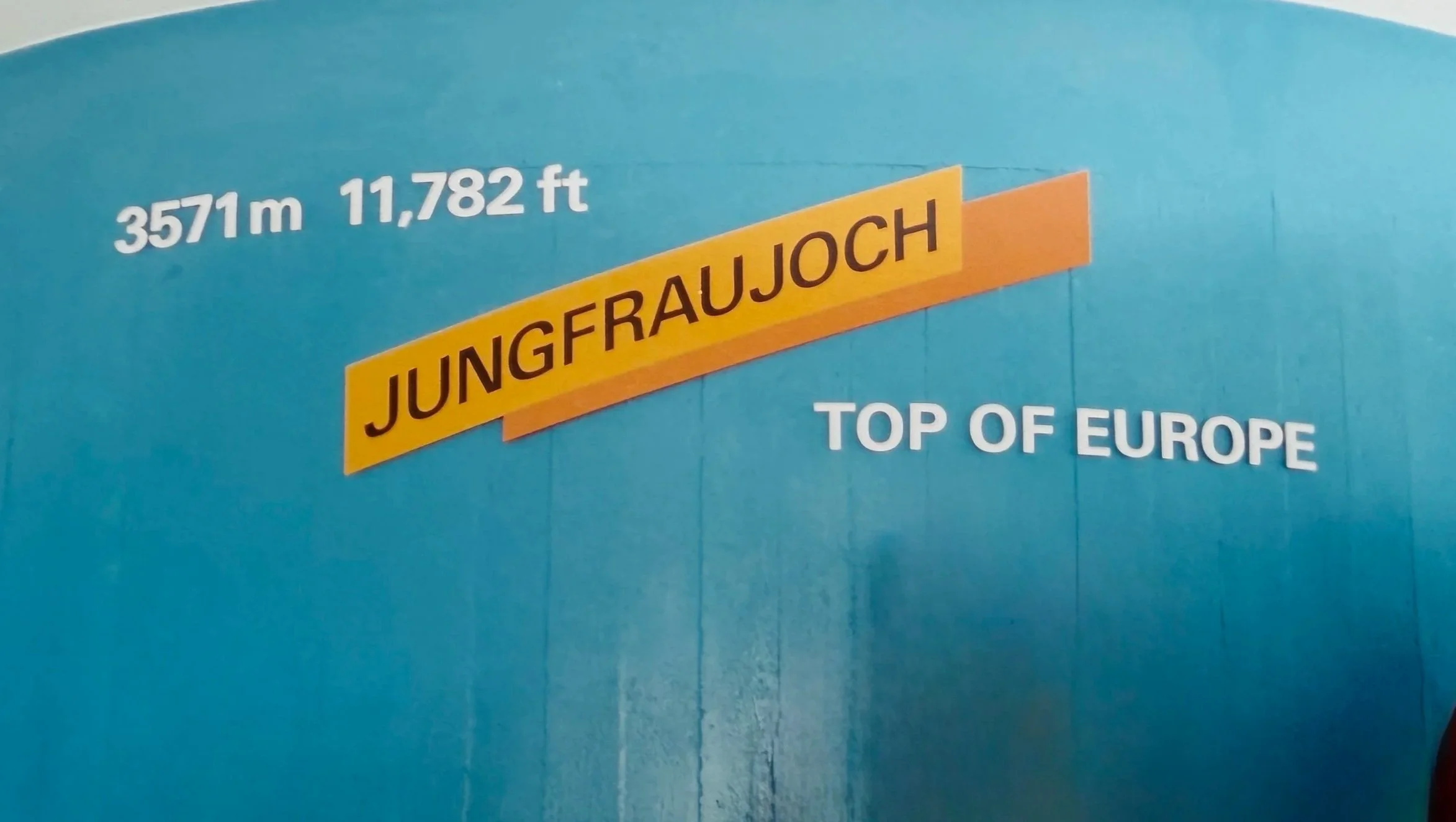
From Interlaken, we took a train to Jungfraujoch, —Europe's highest railway station. The train winds through tunnels carved into the Eiger and Mönch mountains, an engineering marvel from 1912.
At the summit:
The Ice Palace: Tunnels carved into the glacier with ice sculptures. Floors were slippery.
Sphinx Observatory: Panoramic views of the Aletsch Glacier (longest in the Alps, UNESCO World Heritage). On clear days you can see Germany, France, and Italy. Snow and ice 365 days a year.
Bollywood Restaurant: We ate at the Indian buffet at 11,332 feet overlooking the glacier—unexpected but memorable.
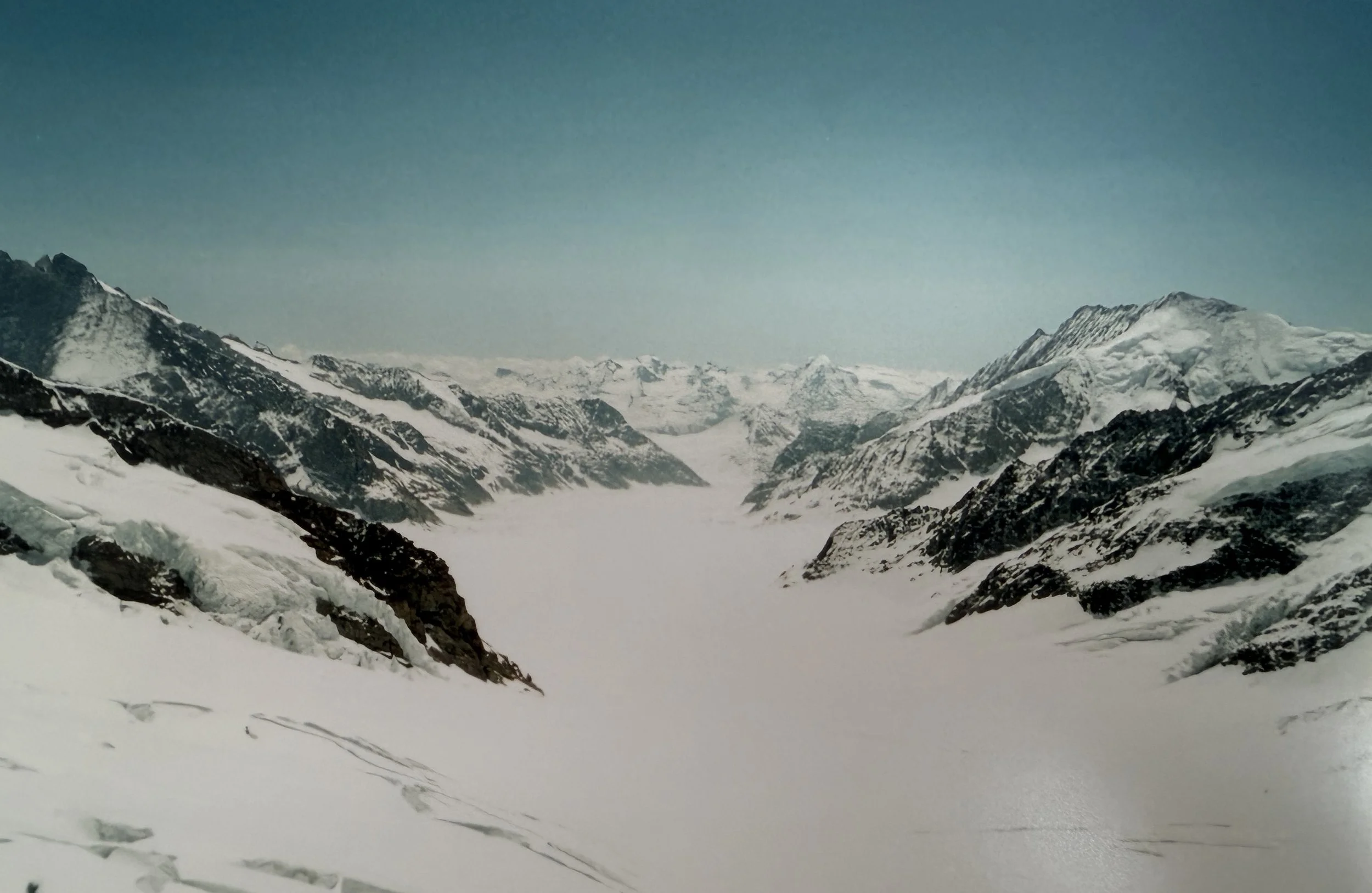
At the summit of Jungfraujoch
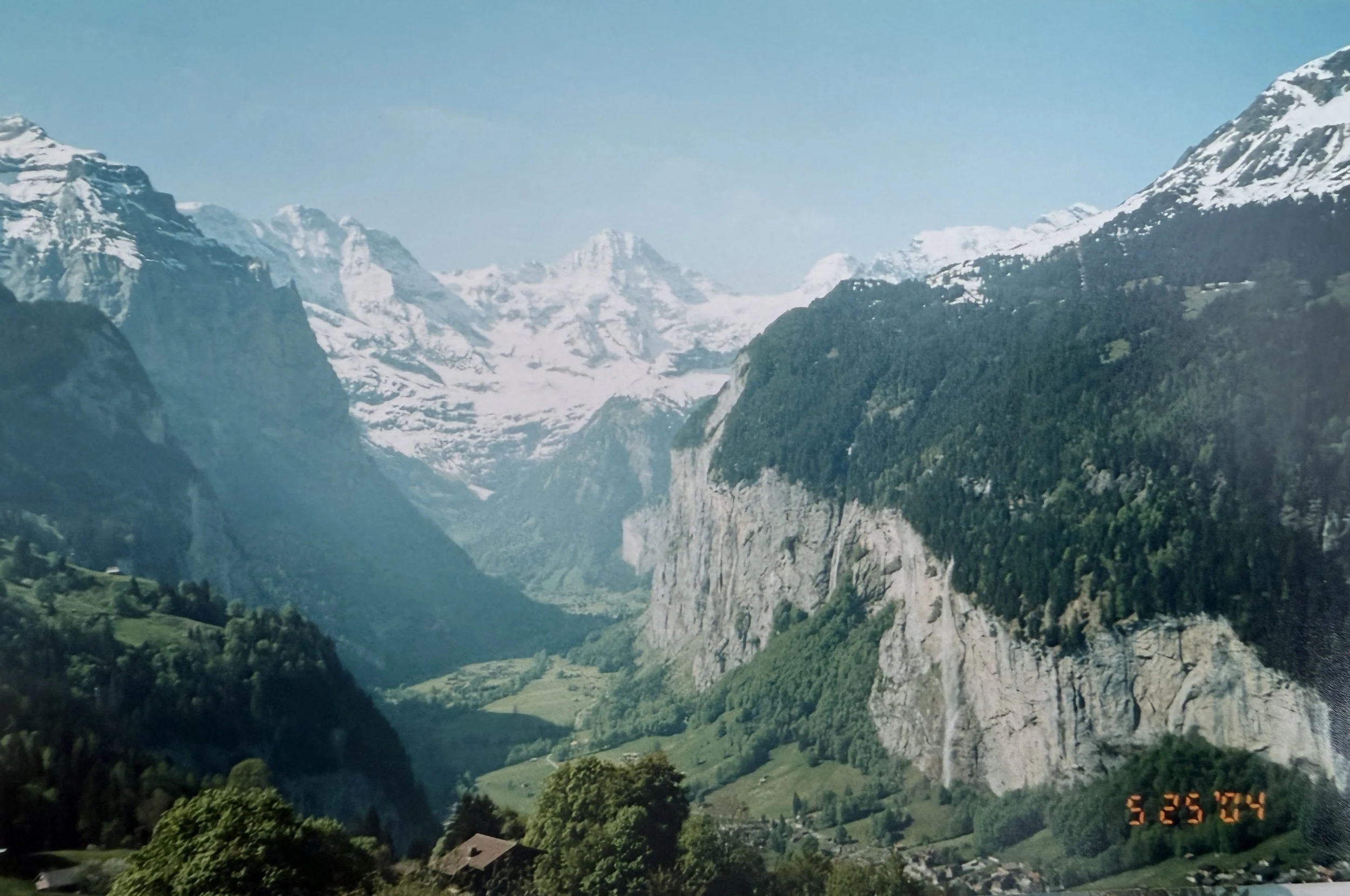
View from the train en route to Jungfraujoch
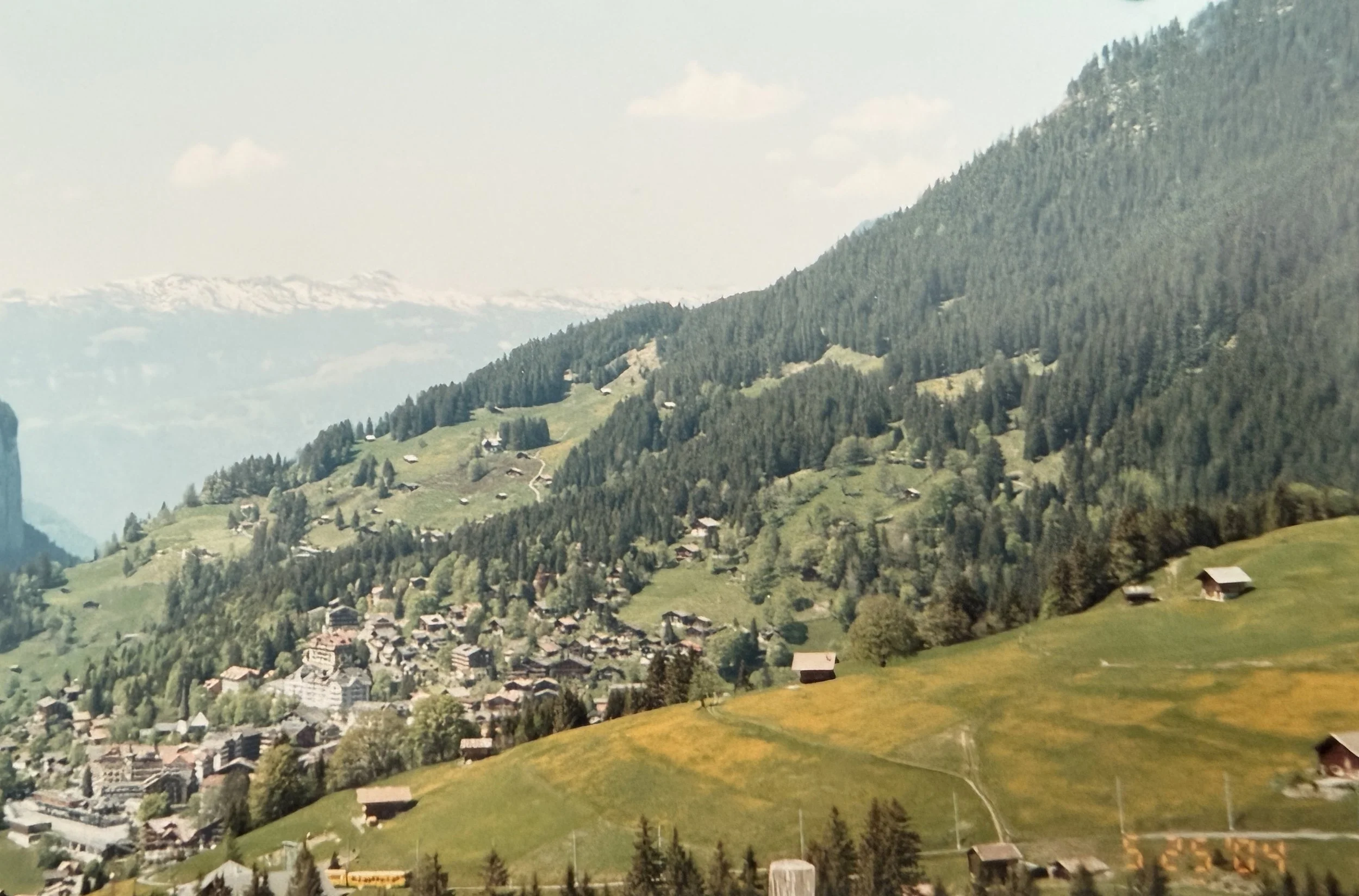
A view captured while descending from Jungfraujoch to Interlaken
Lucerne: Chapel Bridge and Mountain Views
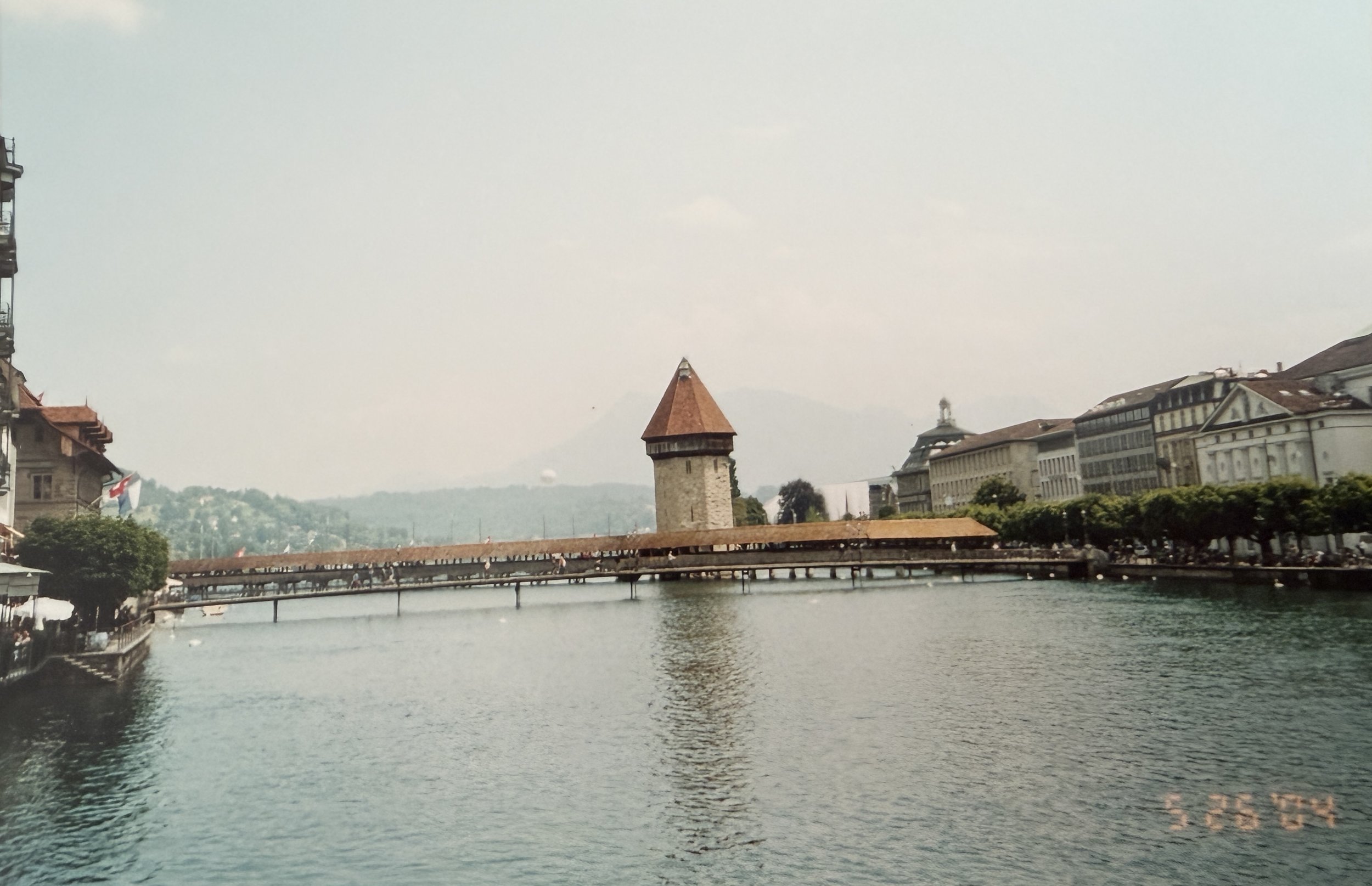
The Chapel Bridge (Kapellbrücke) is the world's oldest wooden covered bridge, dating to around 1365. At 205 meters long, it spans the Reuss River and was built as part of Lucerne's medieval fortifications. The octagonal Water Tower (built around 1300) rises 34 meters from the water—once a prison, torture chamber, and archive.
Inside, triangular paintings depict Lucerne's history and patron saints. These 17th-century paintings survived centuries until a 1993 fire destroyed two-thirds of the bridge. It was rebuilt in eight months and reopened in 1994, with only 30 original paintings restored.
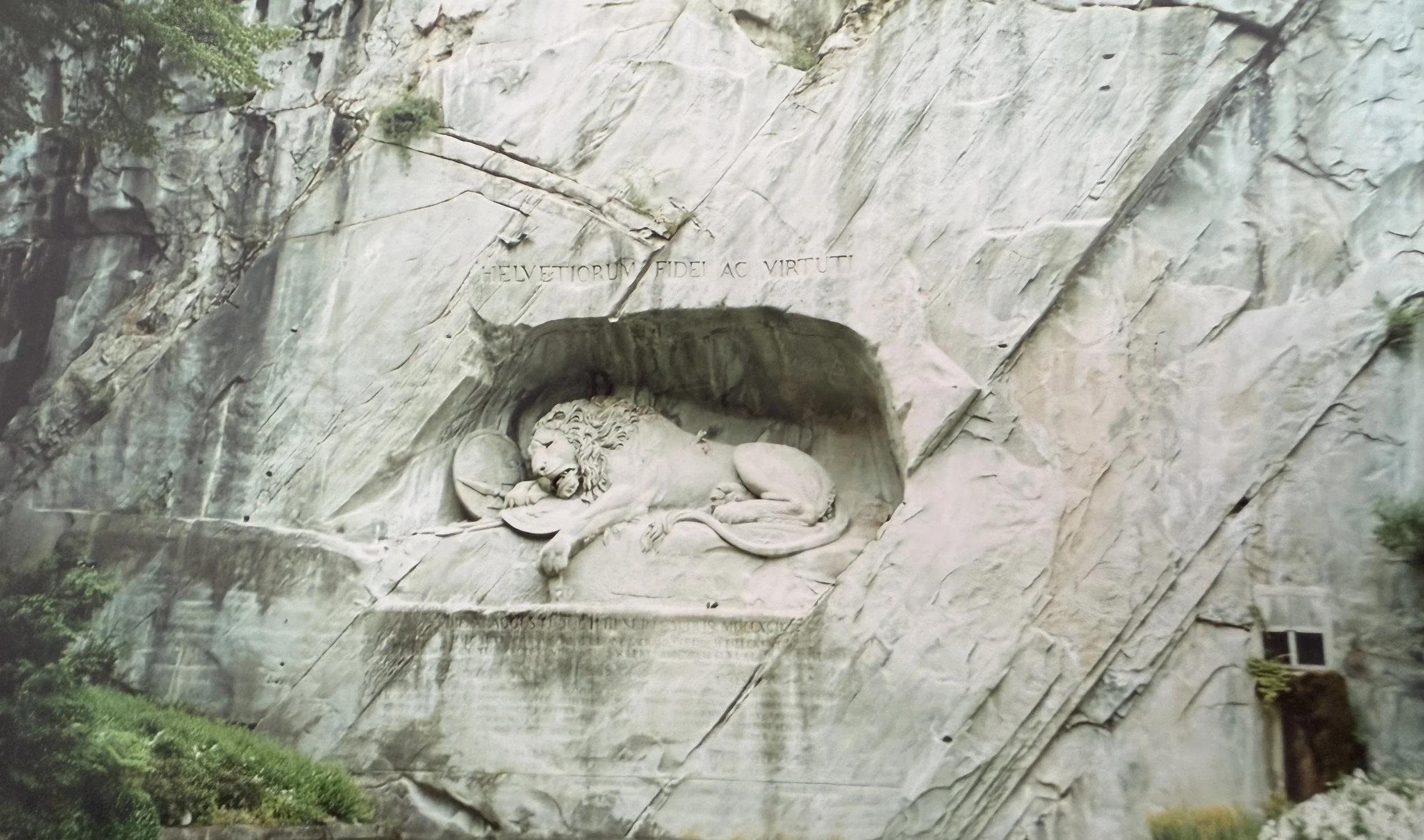
We also visited the Lion Monument—a 10-meter dying lion carved into rock in 1820-21, commemorating Swiss Guards who died during the French Revolution. It sits in a peaceful park with a reflecting pool.
Mount Pilatus Adventure
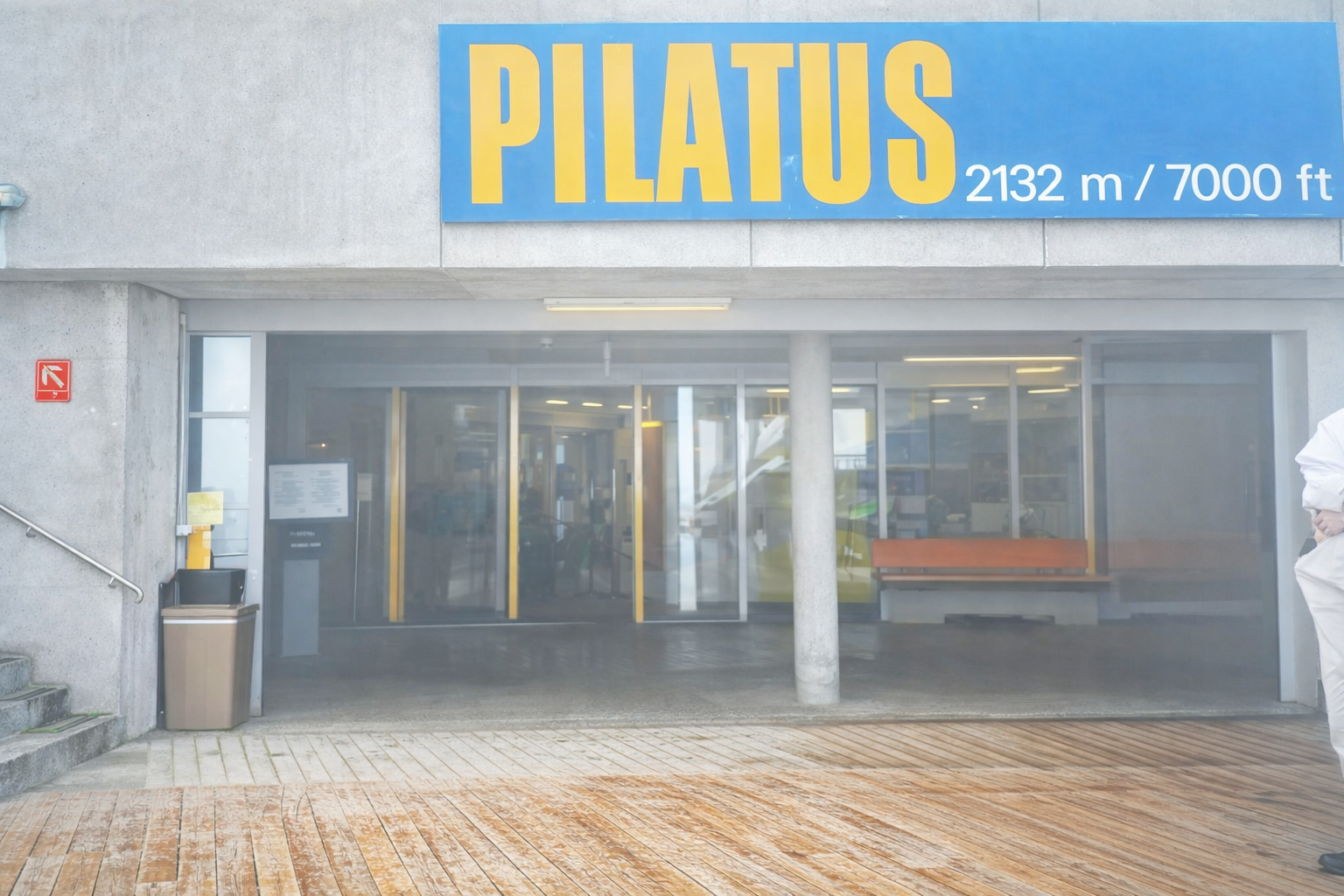
Mount Pilatus (2,132 m/7000 ft) offers the "Golden Round Trip"—different ways up and down the mountain.
We took the cogwheel train up to Pilatus Kulm from Alpnachstad. This railway, built in 1889, is the world's steepest (gradients up to 48%). The 30-minute ride offered incredible views.
For the descent, we took the "Dragon Ride" aerial cable car to Fräkmüntegg, then a gondola down to Kriens (30 minutes total with spectacular alpine views).
At the summit, panoramic views stretched across the Swiss Alps, with Lake Lucerne far below.
Engelberg: Monastery and Cheese
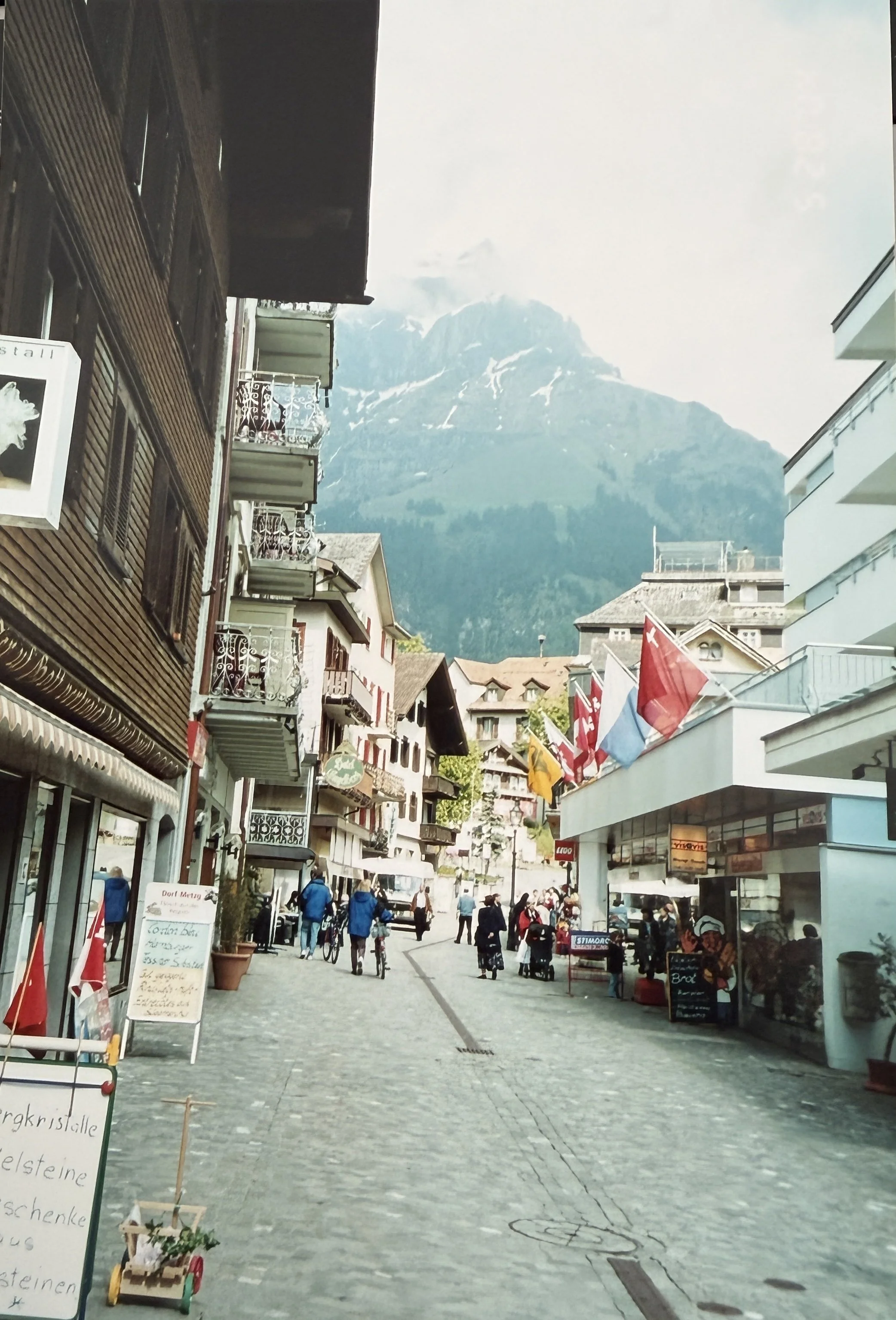
Village of Engelberg
Engelberg is a small mountain village in the Alps—compact and easy to explore on foot. We visited Engelberg Abbey, a Benedictine monastery founded in 1120 (over 900 years old). The complex has baroque architecture, gardens, and Switzerland's largest organ (9,097 pipes).
At the show cheese dairy, we watched artisan cheesemakers produce Engelberger Klosterglocke—a bell-shaped cheese made from milk from 15 local dairy farmers. Visitors can observe the traditional process through glass windows as it unfolds throughout the day.
Tip: Restaurants in Engelberg close in the afternoon and very early at night, so plan your meals accordingly.
Why Switzerland Still Stands Out
The train system made getting around easy, the scenery was gorgeous, and each destination was unique—from medieval towns to glacial peaks. The routes we took in 2004 are still running and just as scenic.
